Gamification Gambits: Engineering Habit-Forming Features in Online Casino Platforms
Gamification Gambits: Engineering Habit-Forming Features in Online Casino Platforms
The Rise of Gamification in Digital Gaming Hubs
Online casino platforms have leaned heavily into gamification techniques over the past decade, transforming simple betting interfaces into interactive worlds designed to foster daily logins and prolonged sessions; researchers at the UNLV International Gaming Institute report that these features boost user retention by up to 40% in some markets, while data from industry trackers like Eilers & Krejcik Gaming reveals average session times stretching 25% longer when points systems and challenges kick in. Platforms engineer these elements drawing from behavioral psychology principles, where triggers like notifications and variable rewards keep players circling back, much like social media feeds but tuned for high-stakes play.
What's interesting here is how operators blend video game mechanics with real-money wagering; badges for milestones, spinning wheels for bonuses, and escalating loyalty tiers create loops that data shows hook 70% of active users within their first week, according to figures from a 2024 study by the New Jersey Division of Gaming Enforcement. And while early adopters experimented with basic leaderboards, today's setups layer in personalization, using algorithms to tailor challenges based on past spins or bets, turning casual visitors into regulars without a single ad spend.
Core Building Blocks: Points, Streaks, and Social Sparks
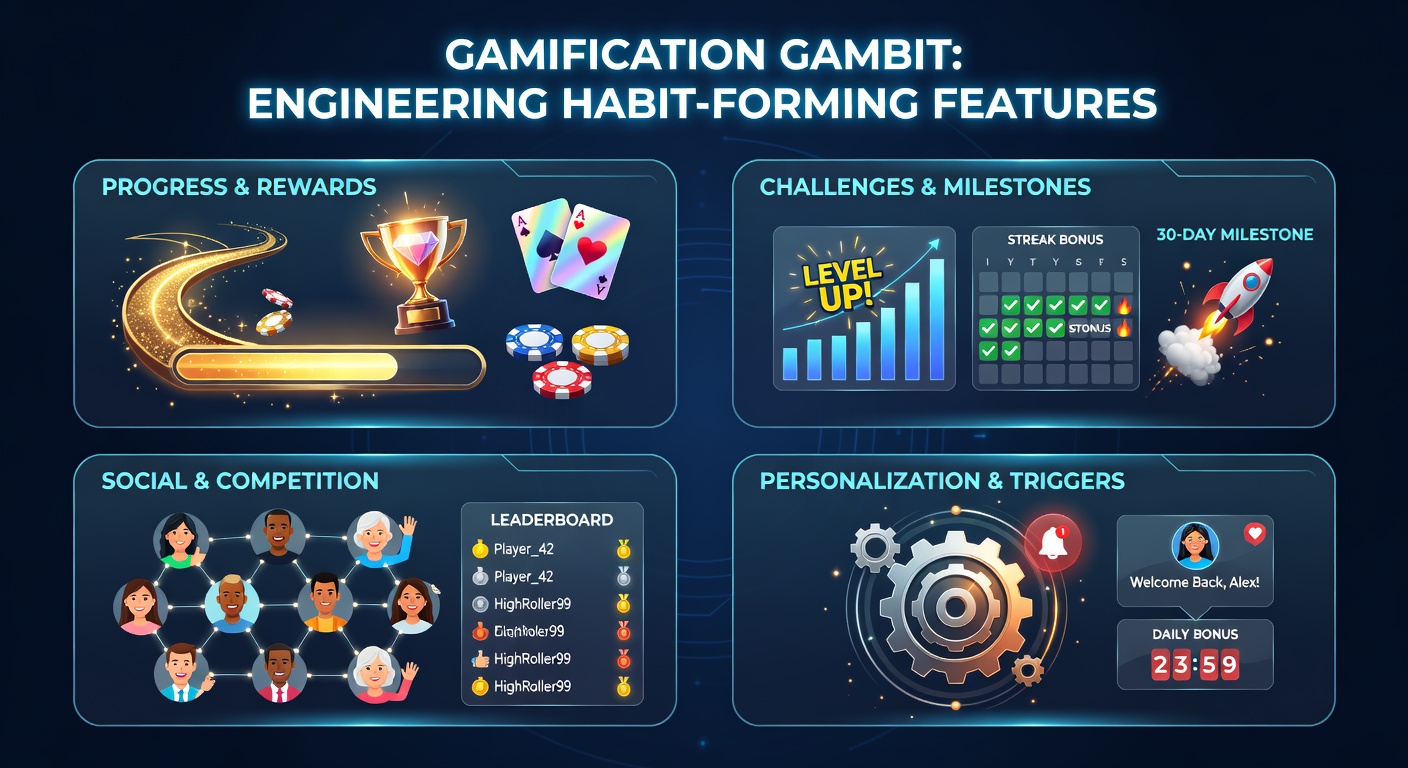
At the heart of these habit-forming designs sit points systems, where every wager earns virtual currency redeemable for free spins or cash boosts; experts observe that such mechanics mimic dopamine hits from slot wins, encouraging streaks that platforms reward with multipliers, so a seven-day login chain might double earnings on day eight, a tactic data indicates sustains 60% of users past the critical 30-day mark. Leaderboards add competitive fire, ranking players regionally or globally, while those at the top snag exclusive perks like VIP invites, fueling rivalries that spill into group chats or shared progress screens.
Daily quests keep the momentum rolling; simple tasks like "spin 50 times on roulette" or "try three new slots" come with escalating rewards, and platforms notify users via push alerts right at peak evening hours, a timing strategy backed by analytics showing 35% higher completion rates. But here's the thing: social gamification takes it further, letting players form squads for collective challenges or gift virtual items, which studies from behavioral economists find amplifies engagement by 50% through peer accountability and shared victories.
Turns out, progress bars play a sneaky role too; filling a meter toward the next level feels tangible, psychologically nudging users to top it off before logging out, even if it means one extra bet, with retention data confirming this "near-miss" effect mirrors classic slot psychology but scales across the entire lobby.
Psychological Hooks and the Hooked Model in Action
Platforms pull from Nir Eyal's Hooked model, layering external triggers like app badges with internal ones such as achievement highs; a player finishes a tournament, unlocks a badge, and gets an instant "share your win" prompt, creating variable rewards that research from the Journal of Gambling Studies links to 28% higher relapse rates among lapsed users. Action phases simplify betting with one-tap wagers during challenges, while investment grows as players customize avatars or stockpile points, making abandonment feel like lost progress.
Observers note how scarcity amps this up; limited-time events with countdown timers spike logins by 45%, per platform A/B testing data, while seasonal campaigns tie into holidays or sports seasons for contextual pull. And personalization engines scan play history to serve bespoke quests, like "double down on your lucky blackjack table," which engagement metrics show lifts daily active users by 22%.

Real-World Case Studies: Platforms That Nailed the Loop
Take one major operator in the EU market, where a 2023 overhaul introduced "battle passes" akin to Fortnite's, complete with tiered skins for slot reels; within six months, average revenue per user climbed 18%, while churn dropped to under 15%, figures the Malta Gaming Authority's compliance audits corroborated through session logs. Across the pond, a Canadian platform rolled out "wheel spins for streaks," rewarding unbroken logins with escalating prize wheels, and data from provincial regulators showed a 32% uptick in monthly actives, particularly among 25-34-year-olds who formed the bulk of leaderboard climbers.
Down under, Australian sites have experimented with "clan wars," pitting player groups against each other in slot marathons; engagement reports indicate teams averaging 40% more spins per session, with social shares driving referral traffic up 25%, a pattern echoed in industry benchmarks. These cases highlight how layering mechanics creates compounding effects; a streak feeds a leaderboard spot, which unlocks quests, pulling users deeper into the ecosystem.
Yet challenges arise in balancing fun with fairness; some platforms cap daily rewards to curb overplay, a move analytics firms credit with stabilizing long-term retention without burnout spikes.
Tech Stacks Powering the Engagement Engine
Behind the scenes, no-code tools like Badgeville or custom Unity integrations handle the heavy lifting, syncing real-time data across mobile and desktop for seamless progress tracking; AI now predicts drop-off risks, auto-deploying personalized nudges like "one spin away from your badge," which pilot programs report reclaim 20% of abandoning sessions. Cloud services from AWS or Google scale leaderboards for millions, while blockchain experiments add provably fair loot boxes, blending transparency with thrill.
Analytics dashboards from providers like Tableau visualize heatmaps of engagement, letting operators tweak multipliers on the fly; for instance, if roulette quests lag, boost their points by 15%, a responsive loop data shows optimizes overall playtime by 12%.
Navigating Regulations: Fair Play in Gamified Worlds
Regulators scrutinize these features closely, with bodies like the Malta Gaming Authority mandating clear terms on reward odds and cooldowns to prevent misleading loops; in the US, states like Pennsylvania enforce session reminders every 60 minutes during streaks, curbing habit escalation, while Australian codes require "reality checks" mid-quest. Data from these oversight reports reveals compliant platforms see 15% fewer complaints, underscoring how transparency builds trust alongside stickiness.
Industry groups push for self-regulation too, with voluntary caps on daily quests in emerging markets, balancing innovation against vulnerability risks.
What's Next: AI, VR, and April 2026 Horizons
Looking ahead, AI-driven dynamic gamification adapts in real-time; by April 2026, platforms anticipate rolling out predictive quests that evolve with user mood via sentiment analysis from chat logs, potentially lifting retention another 25%, per forward-looking models from gaming consultancies. VR integrations promise immersive "casino realms" where avatars climb leaderboards in 3D spaces, early betas showing 50% longer sessions.
Metaverse tie-ins loom large too, with cross-game progress syncing bets across virtual worlds; blockchain NFTs as rare badges add ownership layers, and while pilots face scalability hurdles, traction in Asia-Pacific markets suggests widespread adoption by mid-2026. Sustainability efforts weave in, rewarding "green spins" on low-energy slots, aligning habits with broader trends.
So the evolution continues, with data guiding refinements that keep platforms ahead of saturating markets.
Wrapping the Loops: Key Takeaways on Habit Engineering
Gamification has reshaped online casino dynamics, engineering features that data proves drive sustained engagement through psychological precision and tech prowess; from streak multipliers securing loyalty to AI-personalized quests reclaiming lapsed players, these gambits deliver measurable lifts in retention and revenue. Regulators ensure the scales tip toward fairness, while future innovations like VR and predictive AI signal even tighter loops ahead, particularly as April 2026 deployments unfold across global hubs.
Operators who master this blend thrive, turning one-off bets into enduring player journeys, all backed by the hard numbers of behavioral science and marketplace results.